Loading...
Serving Palm Coast, FL and surrounding areas. (386) 359-8098
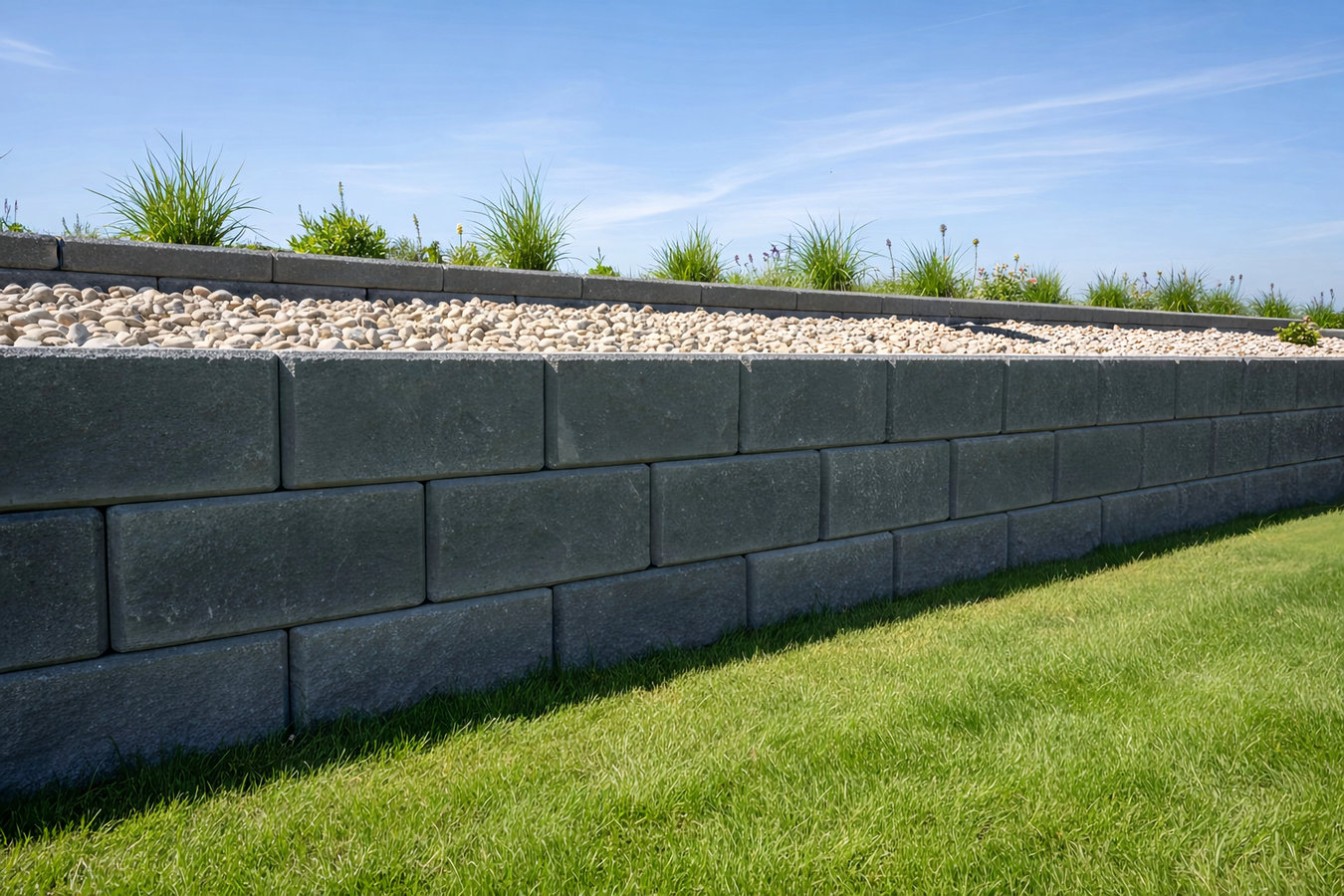
Wood fences rot, warp, and blow down in storms. Concrete block walls do not. We build properly reinforced, permit-ready block walls in Palm Coast that are designed for sandy soil and Florida hurricane seasons.
Concrete block walls in Palm Coast typically run between $15 and $30 per square foot installed, with most straightforward residential projects - a backyard privacy wall, a garden border, or a short retaining wall - completed in two to four days of construction once the permit is approved and the footing has cured.
Palm Coast homeowners often reach us after a wood fence has rotted out, been knocked down in a storm, or been damaged by termites - and they are ready for something permanent. Concrete block does not rot, warp, or attract termites, and when it is built to the wind resistance requirements Florida's building code sets for this region, it stands up to the same storms that flatten wood privacy fences. If your project involves a slope or drainage problem, our retaining wall construction service covers the structural design and footing work needed to hold back soil reliably.
Every block wall project in Palm Coast requires a building permit, and the work is inspected at the footing stage and again at completion. We handle the permit application and coordinate inspections so you do not have to navigate that process yourself.
If you can stand back and see that a section of your wall is no longer straight - bowing outward, leaning to one side, or separating at a corner - the footing or structure has been compromised. In Palm Coast's sandy soil, this kind of movement often happens gradually over several years. A leaning wall does not fix itself, and the longer it sits, the more likely it is to fall.
Small hairline cracks in mortar are often cosmetic, but diagonal cracks running from one block to the next - especially near corners or at the base - suggest the wall is moving or settling unevenly. In Palm Coast, this is frequently tied to soil shifting under the footing after heavy rain saturates the sandy ground. If you can fit a coin into the crack, have someone take a look.
That white residue - efflorescence - is mineral salts being pushed to the surface by water moving through the block. In Palm Coast's humid climate it is especially common on walls that were not sealed or where rainwater pools at the base. Left unaddressed, persistent moisture intrusion weakens mortar over time and leads to more serious structural issues.
Many Palm Coast lots in sections developed in the 1970s and 1980s have drainage challenges that were never fully addressed. If soil washes away from a slope in your yard, or water consistently runs toward your foundation after rain, a concrete block retaining wall can redirect that flow and stabilize the ground - one of the most practical and durable solutions available in Florida's rainy season.
We build concrete block walls for privacy fences, garden borders, retaining walls, and property enclosures. Every project starts with a proper footing - sized and poured for Palm Coast's sandy soil conditions, not to a generic standard that works fine in denser ground but fails here. For walls that require steel reinforcement under Florida's building code, we set the rods and fill the cores as the wall goes up, not as an afterthought. When your project also needs a supporting structure like a foundation block wall, we can handle that scope within the same project so you are not coordinating two separate contractors.
Once the blocks are laid, we offer stucco coating, paint-ready finishes, and decorative caps that give your wall a clean appearance that blends with the style of most Palm Coast homes. We are also familiar with the exterior design standards that apply in Palm Coast's HOA communities - we ask about your association before ordering materials. For soil and erosion control needs that go beyond a simple fence line, see our retaining wall construction page for structural options.
Best for homeowners replacing a wood fence or building a permanent privacy wall that will stand up to Florida storms without replacement every few years.
Best for homeowners dealing with sloped lots, yard erosion, or drainage issues that require a structure to hold back soil and redirect water.
Best for homeowners who want a wall built to the wind resistance requirements Florida's building code sets for this coastal region, with steel core reinforcement.
Best for homeowners who want a finished wall that blends with the stucco-dominant exterior style common throughout Palm Coast neighborhoods.
Palm Coast was developed as a planned community starting in the 1970s, and concrete block is already the dominant construction material for homes here - most houses are built on concrete block walls with stucco exteriors. That same material logic applies to fences, garden borders, and retaining walls. Wood does not last in this climate. Florida's humidity accelerates rot, termites are a genuine threat, and any strong tropical storm tests wood fencing seriously. Concrete block is also what Florida's building code was written with in mind - the wind resistance requirements for this coastal region are built around block construction with steel reinforcement, not wood. Getting that reinforcement right matters in a county that has been directly impacted by multiple named storms.
Palm Coast's sandy soil also requires more careful footing work than many homeowners realize. We size and pour footings specifically for the ground conditions here. Homeowners across the region - including those in Bunnell and Ormond Beach - face similar soil and climate conditions, and we bring the same approach to footings and reinforcement regardless of which community the wall is going in.
Reach out by phone or contact form and describe what you are trying to build. We will ask a few basic questions about size, your HOA situation if you have one, and what the site looks like. We respond within one business day and schedule an on-site visit.
We visit your property, check the ground conditions, measure the area, and review any existing structures nearby. A written estimate follows within a few days - covering materials, labor, footing work, finish options, and permit fees with no hidden additions later.
We submit the permit application to the City of Palm Coast before work begins - typically approved in one to two weeks. Once the permit is in hand, work starts with digging the trench and pouring the footing. The inspector checks the footing before any blocks go up.
Once the footing cures and passes inspection, the crew lays blocks one course at a time, checking level and plumb throughout. Steel reinforcement goes in where required. After the wall is done, we apply the agreed finish, clean up the site, and coordinate the final city inspection to close out the permit.
Free on-site estimates. We handle permits, inspections, and HOA documentation from start to finish.
We do not pour a generic footing and hope the ground holds. In Palm Coast, sandy coastal soil requires footings dug to stable ground and poured at the right width and depth for the wall's load. That invisible step is what separates a wall that stays straight for decades from one that starts to lean after the first few rainy seasons.
Florida's building code requires steel reinforcing rods in walls above a certain height in this coastal region. We include that reinforcement for every wall that qualifies - not as an upsell, but because it is what makes a wall perform the way it is supposed to when a tropical storm tests it. The Florida Building Code sets those requirements for a reason.
We apply for permits through the City of Palm Coast Building Services for every qualifying project and coordinate all required inspections. Unpermitted block walls are one of the most common issues that surface during home sales in this area - our process protects you from that problem entirely.
Palm Coast has some of the most active HOAs in Flagler County. Neighborhoods like Grand Haven, Palm Harbor, and Lehigh Woods have specific rules about wall height, color, and finish. We ask about your HOA during the estimate conversation and make sure your wall is approved before a single block goes down - which means no surprise letters asking for modifications after construction.
Every concrete block wall project we take on in Palm Coast is permitted, inspected, and built with the soil and climate conditions of this specific area in mind. That combination is what our customers in this market rely on, and it is the standard we hold ourselves to on every job.
Structural block wall installation for foundations and load-bearing applications where standard fencing walls are not sufficient.
Learn MoreEngineered walls designed to hold back soil, control erosion, and manage drainage on sloped Palm Coast lots.
Learn MorePermit season books out quickly - contact us now to get your project on the schedule before the next rainy season.