Loading...
Serving Palm Coast, FL and surrounding areas. (386) 359-8098
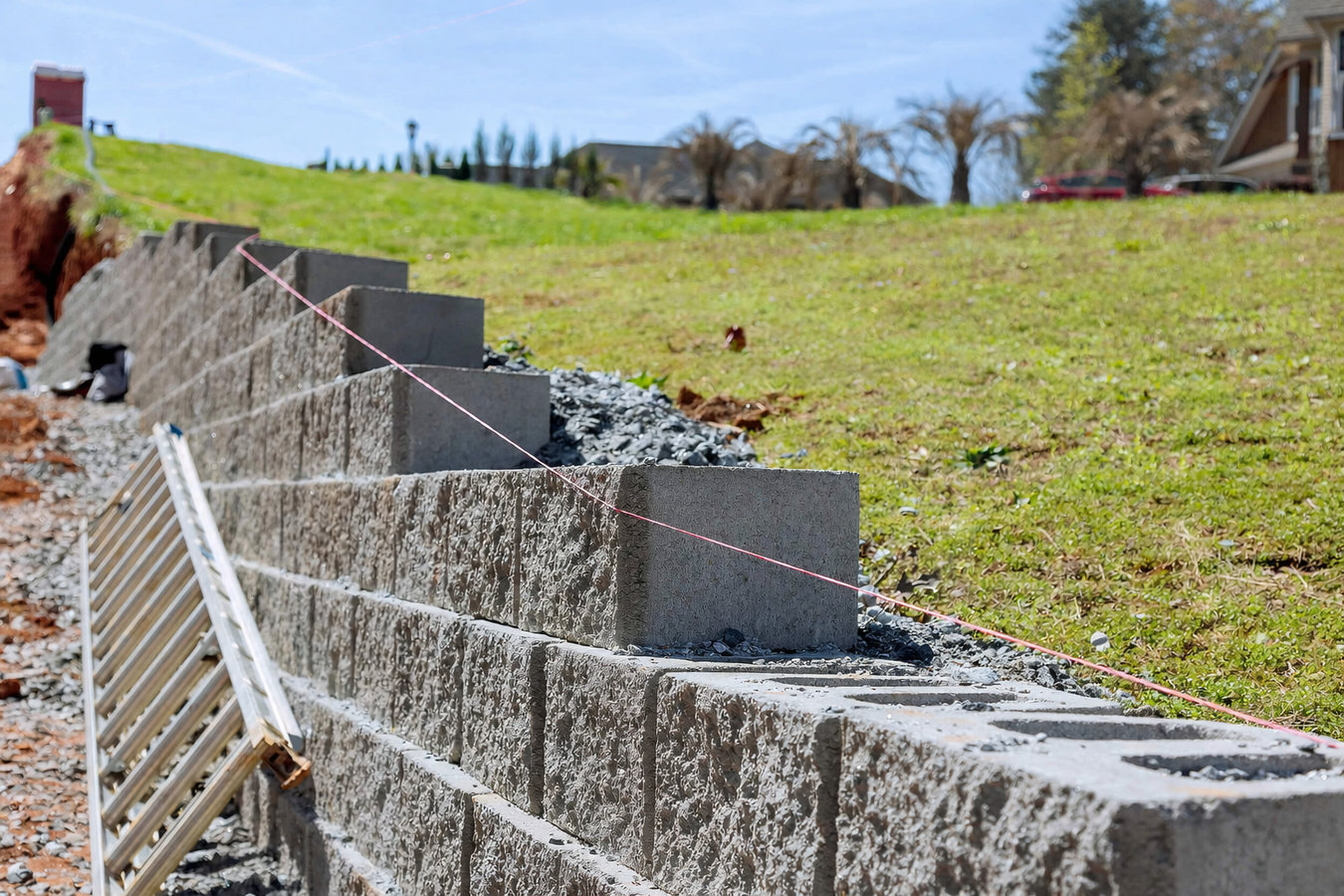
Sandy soil, canal-side slopes, and summer downpours are working against your yard. We build retaining walls in Palm Coast that hold your ground and protect what is behind them.
Retaining wall construction in Palm Coast holds back soil on sloped or canal-adjacent lots, most residential walls take one to three days to build once the base is prepared and any required permits are in hand.
Most homeowners reach out when something has already started going wrong - soil washing onto the driveway after every storm, an old wall that is starting to lean, or a slope that makes part of the yard feel unusable. Palm Coast's loose sandy soil and intense summer rainfall season mean these problems are common here, and they do not resolve on their own. A properly built wall stops the movement and keeps it stopped.
Retaining walls often work alongside other masonry projects. If you are already improving your outdoor surfaces, masonry restoration can address any existing structural work that needs attention before you add new elements to your property.
Bare patches appearing on a slope after heavy storms, or mulch and soil washing onto your driveway or sidewalk, is active erosion. Palm Coast's intense summer rain events accelerate this quickly - what starts as a minor wash can become a significant slope failure within a season or two.
When the ground tilts toward your home's foundation or garage, water naturally flows that way too. Over time, that runoff can undermine your foundation, crack your driveway, or flood your garage - all expensive problems that a properly placed retaining wall can prevent.
A wall that is tilting forward, developing cracks along the face, or showing gaps between blocks is under stress it cannot handle. In Palm Coast's sandy soil, a wall that starts to lean rarely corrects itself - getting it assessed now is far less expensive than dealing with a collapse.
Standing water collecting against your home's foundation after Palm Coast's summer storms signals that grading is working against you. A retaining wall combined with proper regrading redirects that water before it ever reaches your foundation - protecting one of the most expensive parts of your home to repair.
We build retaining walls from concrete block, natural stone, and poured concrete depending on what the site requires and what the homeowner wants it to look like. Every wall includes drainage planning from the start - gravel backfill and perforated pipe behind the wall so water has a clear path out. Skipping that step is the most common reason walls fail early, and we do not skip it. For smaller decorative applications like garden beds and landscape borders, block walls offer a clean, durable solution at a lower cost than natural stone.
Larger structural walls that hold back significant soil - including tiered walls on steeper lots - require more careful engineering and often a Flagler County permit before work begins. We handle the permit application as part of the project. For properties with existing masonry that needs attention, our masonry restoration service addresses older walls and structures before they reach the point of full replacement. Where a retaining wall is part of a larger hardscape project involving a driveway or patio edge, our work with concrete block walls provides a consistent material and installation standard across the whole project.
Suits homeowners needing a durable, cost-effective wall for erosion control, slope stabilization, or garden bed borders.
Suits homeowners who want a more natural or upscale appearance, particularly in visible front-yard or canal-facing locations.
Suits homeowners with steep or multi-level lots who need to break a tall grade change into manageable, stable tiers.
Suits homeowners with an existing wall that is leaning, cracking, or showing drainage problems before it reaches the point of full failure.
Palm Coast receives roughly 52 inches of rain per year, concentrated in intense afternoon storms from June through September. That volume of water puts real pressure on any retaining wall, especially if drainage was not built in correctly from the start. The city also sits on loose, sandy coastal soil that does not hold weight the way clay or compacted earth does - so the base preparation here has to be more thorough than what a contractor might do in another part of the state. When a wall fails in Palm Coast, it is almost always a drainage or base problem, not a material problem.
Many Palm Coast properties also back up to the city's network of freshwater canals, which adds a layer of complexity - projects near canals or designated wetlands may require review from the St. Johns River Water Management District in addition to the standard Flagler County permit. We work throughout the area, from neighborhoods in Ormond Beach to canal-adjacent lots in Flagler Beach, and we understand when that extra review applies so your project does not stall after it has started.
We reply within one business day. We will schedule a free site visit to walk the area with you, ask about what you are trying to solve, and take measurements - no obligation at this stage.
After the site visit, you get a written estimate breaking down labor, materials, and any drainage work included. We explain your material options in plain terms so you can make a choice that fits your budget and your yard.
If your wall needs a Flagler County permit, we handle the application on your behalf. If you live in an HOA community, we flag what documentation you need before any work starts - so nothing gets torn out later.
The crew excavates, compacts the base, builds course by course, and installs drainage behind the wall. Once complete, we walk the finished wall with you and clean up the site. If a county inspection is required, we coordinate that too.
Free site visit. Written quote. Permitted work. We respond within one business day.
Water is the number one reason retaining walls fail, and we treat drainage as a required part of every wall we build - not an optional add-on. Gravel backfill and drainage pipe behind the wall give water a clear path out before it builds enough pressure to push anything.
We pull the Flagler County permit on every project that requires one and coordinate the county inspection at the end. Flagler County Building Department sign-off creates a documented record that the wall was built to standard - which protects you at resale.
Many Palm Coast properties back up to the city's canal network, and we know when a project near a canal or wetland buffer may need review from the St. Johns River Water Management District. We flag this early so it does not cause delays after work has started.
A large portion of Palm Coast's neighborhoods have active HOAs with rules about what you can build. We do not start work until you have written approval from your community, so you are never in the position of defending a completed project that the HOA did not authorize.
Each of these practices reflects the realities of building in Palm Coast specifically - the soil, the rainfall, the canal proximity, and the HOA landscape. A retaining wall contractor who does not know this area will skip steps that matter here, and you will see the results within a few years.
Repair and restore existing masonry structures before adding new walls or hardscape to your property.
Learn MoreBuild freestanding or structural block walls as part of a larger hardscape or landscaping project.
Learn MoreOur calendar fills fast heading into summer - reach out now and lock in your start date.