Loading...
Serving Palm Coast, FL and surrounding areas. (386) 359-8098
Sandy soil, a high water table, and hurricane season make Palm Coast one of the toughest environments for foundation work - we build walls that hold up to all of it.
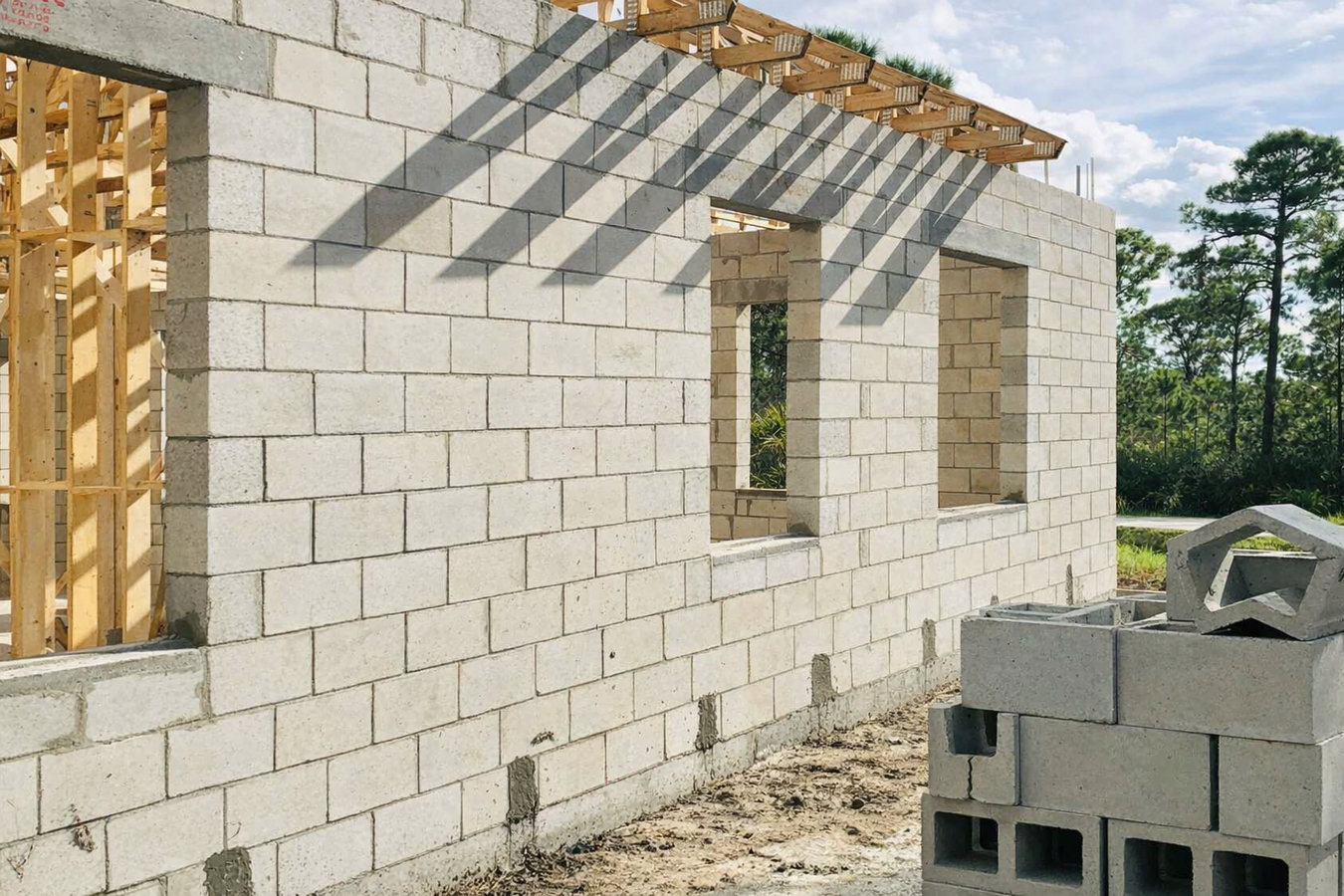
Foundation block wall installation in Palm Coast means stacking and mortaring hollow concrete blocks over a poured footing, filling key cores with steel and concrete for strength, waterproofing the exterior face, and passing Flagler County inspections at every stage - most residential projects take three to six weeks from permit to final sign-off.
Whether you are adding a new room, a garage, or any permanent structure to your property, Florida's building code requires a proper block wall foundation before framing can begin. The sandy soil and high water table that define this area mean the footing design and waterproofing choices matter more here than in most parts of the country. If your home already has an existing foundation showing signs of cracking or moisture damage, our foundation repair service is worth a look before committing to new construction.
Palm Coast Concrete and Masonry has been installing block wall foundations across Palm Coast and the surrounding Flagler County area, handling every permit, every inspection, and every waterproofing detail so you do not have to.
Cracks in your interior drywall or exterior stucco that angle outward from the corners of door frames or window openings often point to the foundation shifting or settling unevenly. In Palm Coast, where sandy soil can compact or wash out over time, this kind of movement is more common than in areas with denser ground. A crack that has grown since you first noticed it is more urgent than one that has stayed the same size.
When a foundation wall shifts, the frame of your home can rack slightly out of square, which causes doors and windows to bind in their frames. If you have a door that used to swing freely and now drags on the floor or will not latch without force - and you have not had any recent plumbing leaks - the foundation is worth having looked at. This symptom is especially worth taking seriously in older Palm Coast homes built in the 1980s and 1990s.
Those white streaks or powdery patches on concrete block walls are caused by water moving through the wall and depositing minerals on the surface as it evaporates. In Palm Coast's humid, high-water-table environment, this is a sign that moisture is getting into the wall regularly - which weakens the block over time and can lead to mold on the interior side. It does not always mean the wall needs replacement, but it does mean the waterproofing has failed.
If you are adding a room, a garage, a workshop, or any permanent structure to your Palm Coast property, you need a code-compliant block wall foundation before building begins. Florida's building code does not allow permanent structures to rest on grade-level slabs alone in most residential applications. Starting construction without one will fail inspection and may require you to tear out completed work.
Every foundation block wall installation we do starts with a site visit to assess your soil conditions and drainage before a single number goes on a quote. We handle the full scope: footing excavation, steel placement, block coursing, core filling, exterior waterproofing, and backfill grading so water drains away from the wall rather than toward it. For properties being expanded with living space, we also connect the new foundation work to any needed outdoor kitchen masonry or covered structure work as part of a coordinated project.
We pull every required permit through Flagler County Building Services and schedule all inspections - you receive a copy of the passed final inspection report before the job is closed out. For homeowners dealing with an existing foundation that needs structural correction rather than new installation, our foundation repair team handles crack injection, waterproofing membrane replacement, and drainage correction.
Ideal for homeowners adding a room, garage, or permanent outbuilding and need a full block wall foundation from scratch.
For existing homes being expanded with a bump-out, sunroom, or attached structure that ties into the current footprint.
Workshops, pool equipment enclosures, and storage structures that require a code-compliant foundation before framing.
Waterproof membrane application and perimeter drainage installation for new walls and existing block walls losing their protection.
Palm Coast sits on a coastal plain where the soil is predominantly fine sand with very low load-bearing capacity. That means footings here often need to be wider and sometimes deeper than what a generic plan calls for. Add the city's high water table - especially in neighborhoods that border the canal system running through the residential sections - and you have a foundation environment that punishes shortcuts on waterproofing and drainage design. Every footing we pour is sized to what your specific lot actually requires, not copied from a standard detail that was drawn for a different soil type. Homeowners in Flagler Beach face the same coastal conditions plus direct salt air exposure, and our crews are familiar with both environments.
Florida's building code also places Palm Coast in a high-wind zone, which means foundation walls here require more steel reinforcement and closer spacing of filled cores than you would see on a comparable project in the Midwest. Flagler County inspectors check for these requirements specifically, and we build to them on every job. For properties further south in our service area, including work in Ormond Beach, the same wind zone and soil awareness guides every foundation decision we make. An authoritative overview of Florida's statewide structural requirements is available through the Florida Building Commission.
Call or submit a contact form and we will reply within one business day to schedule a visit. We come to your lot, check the soil and drainage, and give you a written price before you commit to anything - no charge for the visit.
Once you sign, we submit the permit application to Flagler County Building Services. Permit review typically takes one to two weeks. We handle all the paperwork and give you the permit number so you can verify it is active before work starts.
After the county inspects the footing trench, we pour the concrete base and let it cure before stacking block. Steel runs through the cores at the required intervals, and those cores are filled as the wall rises. Expect noise and an active crew on-site for one to five days depending on the wall size.
Before any soil goes back against the wall, we apply a waterproof membrane to the exterior face and install drainage as needed. The county does a final inspection before the job is closed. You receive a copy of the passed inspection report and the site is cleaned up before we leave.
We visit your lot, check the soil, and give you a written price. No obligation, no pressure.
Flagler County requires a permit for foundation work, full stop. We submit the application, track the review, and hand you the permit number before a shovel hits the ground. You never have to chase down paperwork or wonder whether the work is legal.
Sandy coastal soil behaves differently than the dense clay or rock found in other parts of the country. Every footing depth, drainage detail, and reinforcement call is made for your specific lot - not copied from a generic plan that was written for somewhere else. This is what separates work that lasts from work that settles.
Florida's high-wind zone requirements mean more steel and more filled cores than a standard build elsewhere. Flagler County inspectors verify this specifically, and we build to those standards on every wall. When the next storm season comes through, your foundation is not a question mark.
Exterior waterproofing and proper backfill grading are part of every foundation we install - not add-ons presented at the end of the job. The Masonry Contractors Association of America recognizes waterproofing as a non-negotiable step in Florida foundation work, and so do we.
Every one of these commitments comes back to the same idea: a foundation is the one part of your home you cannot easily fix later. We take the time upfront to do it right for where you actually live. The Masonry Contractors Association of America publishes current best practices for block wall construction that guide our approach.
Permanent concrete block outdoor kitchens built to handle Palm Coast's coastal humidity, salt air, and sandy soil conditions.
Learn MoreCrack injection, waterproofing membrane replacement, and drainage correction for existing block wall foundations showing moisture or structural issues.
Learn MorePermit season fills up - the sooner you reach out, the sooner we can lock in your start date.